Category
TV Autographs
Series casts, character actors and voice performers
Television is collected by show and by cast, not by star alone. What a signed TV piece looks like, why the long-running character actors can be harder to find than the leads, and how voice roles fit in.
A TV collector is usually building around a show: the whole bridge crew, the family on the sofa, the cast of a sitcom they grew up with. That makes television behave differently from film. Supporting players matter as much as the lead, a missing cast member can hold a collection up for years, and actors who stepped away from the public eye leave very little behind.
It is also where voice performers belong. A character people have heard for decades can be signed by the person who gave it a voice, and those pieces have their own following.
Real examples
From the Piece of the Past inventory
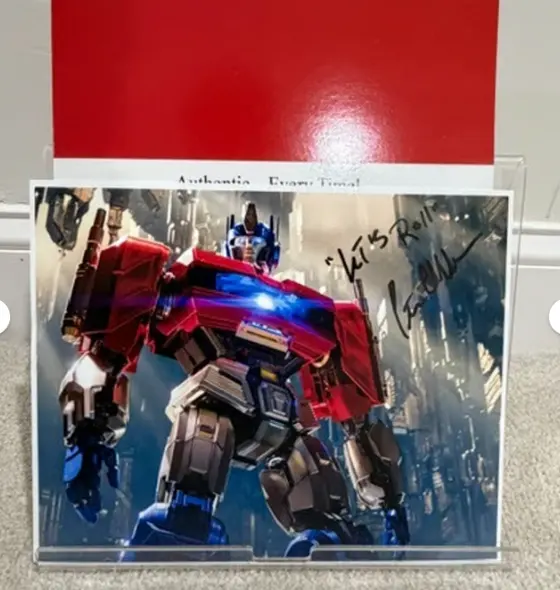
What gets signed
- Character photographs
- Publicity stills and screen captures in character. The standard format, and the easiest for an authenticator to compare.
- Episode scripts
- Plentiful as paper, valuable when signed by the cast who performed it. A specific, identifiable episode beats a generic one.
- Cast-signed pieces
- The goal for most TV collectors. Genuine examples are usually built over years, one signing at a time.
- Voice roles
- The character image signed by its voice. Collected by fans of the character first, so the image matters more than it would for an on-screen actor.
Why the supporting cast is often the hard part
Leads of a hit show usually sign for decades afterwards. Supporting players who left acting, avoided conventions or died young can be much harder to find, and a cast piece is only as complete as its scarcest member.
Ricardo Montalbán, the host of Fantasy Island, is among the thousands of private signings Piece of the Past has run, and it is private signings like that, rather than mail-in requests, that the firm's modern TV material comes from.
Where TV pieces go wrong
- Fan-mail replies
- Networks and studios answered fan mail at scale, often with signatures by staff or machine. A photo that arrived in the post decades ago is not proof of anything.
- One-hand casts
- A cast photo where every name shares one pen and one rhythm.
- Preprints
- Signature printed into the photo, most common on cast shots.
What holds demand
Shows that are still rewatched, still syndicated or still streaming keep recruiting new collectors. Science fiction, long-running sitcoms and animation with a multi-generation audience hold up best. The firm has seen that firsthand: for six years Piece of the Past ran "Showbiz Collectibles", a home-shopping show that put its inventory on television six hours a week.
What moves value
- Completeness
- For cast pieces, every missing principal costs more than the last.
- The character
- An image of the role people remember, not a later headshot.
- Scarcity of the signer
- Often the supporting actor, not the lead.
- Provenance
- Signed in front of someone who can say so.
Next
See the TV pieces available now
Screen material is listed across the four marketplaces the firm sells through, and often told in story form on the Whatnot shows.
View current inventory